When a life becomes part of a nation’s identity
By Yusniza Kamarulzaman
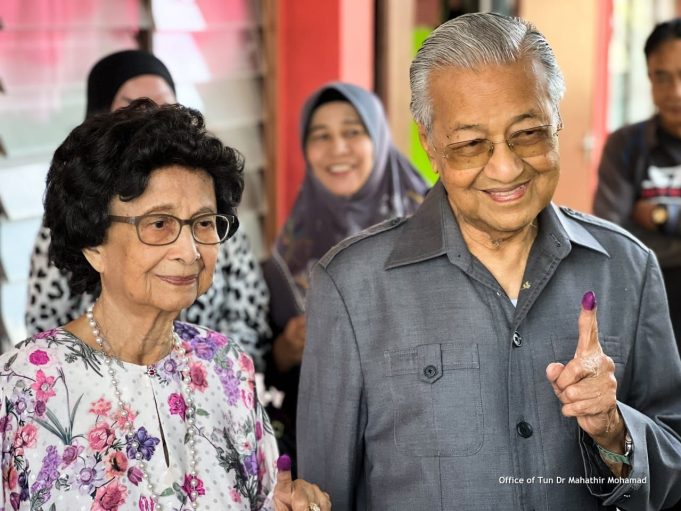
For generations of Malaysians, Tun Dr Mahathir Mohamad and Allahyarhamah Tun Dr Hasmah have held a special place in our hearts. Through every chapter of our nation’s journey, they were there: steady, familiar, quietly present. Now that she is gone, many of us grieve as we would for our own mother.
Her passing on Sept 28 has brought a deeply personal loss into our public life. For Tun Dr Mahathir, it means facing the days ahead without the woman who shared 70 years of marriage with him.
Our beliefs and perspectives may differ, yet we recognise the love at the heart of a lifelong companionship. It brings to mind our own parents growing old together and the small routines that make a shared life precious. In that human connection, Malaysians across backgrounds and generations can find common ground.
For us as social science researchers at Universiti Malaya (UM), this connection between people and public figures has emerged repeatedly in our work. Since 2009, our branding studies have explored how Malaysia and its institutions are perceived. This work has included Education Malaysia branding across Asian countries in 2015, the global presence of Malaysian universities in 2018, and nation and country branding between 2020 and 2022.
Across our studies, Tun Dr Mahathir’s name has stood out as a powerful symbol of Malaysia. Most participants mentioned him when asked what they knew about the country or how they would describe its defining characteristics. This association was particularly prominent among foreign visitors, for whom his name had become closely linked with Malaysia itself.
Part of Tun Dr Mahathir’s appeal lies in a life story many Malaysians can relate to. The son of a schoolteacher in Alor Setar, he helped his family by selling food at Pekan Rabu during the Japanese occupation. Education opened the way to medicine, and his journey eventually led him to become Malaysia’s longest-serving prime minister.
His leadership has drawn admiration and criticism. For many Malaysians, he remains a hero, associated with the country’s modernisation and its confidence on the world stage. The title Bapa Pemodenan Malaysia, the Father of Malaysia’s Modernisation, positions him as a strong icon in our history.
Under Tun Dr Mahathir’s leadership, national aspirations found clear expression in Bersih, Cekap dan Amanah and Wawasan 2020. Their straightforward language helped Malaysians across educational backgrounds understand and embrace a shared vision for the country.
In our view, some newer Malaysian slogans and concepts are less easy to grasp at a glance. Their meaning may require explanation before people can picture how they relate to everyday life. Clear language helps people understand a vision. Lasting recognition grows through the leadership and service associated with it.
This is where sincerity matters. People come to recognise it when commitments are sustained, and words are supported by action. A carefully presented image may attract attention; a reputation acquires lasting meaning through the experience people associate with it. Service gives the public something to remember after a campaign has ended.
Allahyarhamah Tun Dr Hasmah’s life offers another way to understand that connection between service and public affection. Her place in Malaysia’s story grew through her work in medicine and service to the community, alongside her role as the wife of a prime minister.
As a medical doctor, she worked in maternal and child health and contributed to public health and community welfare. Her example speaks to young women considering their futures, and to professionals who hope to put their education to meaningful use. It reminds us how much a life devoted to care can contribute to society.
Her support for Malaysian badminton brought that care into another part of national life. Sport gives Malaysians occasions to hope and celebrate together. Her encouragement of our players offered a familiar connection with those shared moments.
Their shared journey also has roots in an institution close to us. Both are part of UM’s alumni heritage, having studied medicine at King Edward VII College of Medicine in Singapore. The college merged with Raffles College in 1949 to form the University of Malaya.
As UM celebrates its 121-year history in 2026, a history that began with that medical school in 1905, their connection to it gives us reason to reflect on the purpose of education. Knowledge gained at a university can shape lives far beyond its campus. Their paths from medical education into public service illustrate that responsibility.
The same lesson applies to leadership. Those who lead the country, our universities or other organisations earn confidence through their actions over time. People look for promises that are honoured and work that improves lives. A leader’s values earn trust when people see them put into practice.
As we remember Allahyarhamah Tun Dr Hasmah with affection and gratitude, our thoughts are also with her family. Behind a life so publicly shared lies a deeply private sorrow, deserving of tenderness and understanding.
Our research reveals how a leader’s persona, rooted in a genuinely humble life story people recognise and relate to, can become woven into a nation’s identity. In Tun Dr Mahathir, that story connects modest beginnings with Malaysia’s aspirations and growing presence on the world stage. The affection surrounding Allahyarhamah Tun Dr Hasmah reminds us how deeply such a shared story can live in a nation’s heart.
The author is a Professor of Marketing at the Faculty of Business and Economics, Universiti Malaya, and can be reached at yusniza@um.edu.my