Is war the ultimate climate wake-up call?
By Professor Dato Dr Ahmad Ibrahim
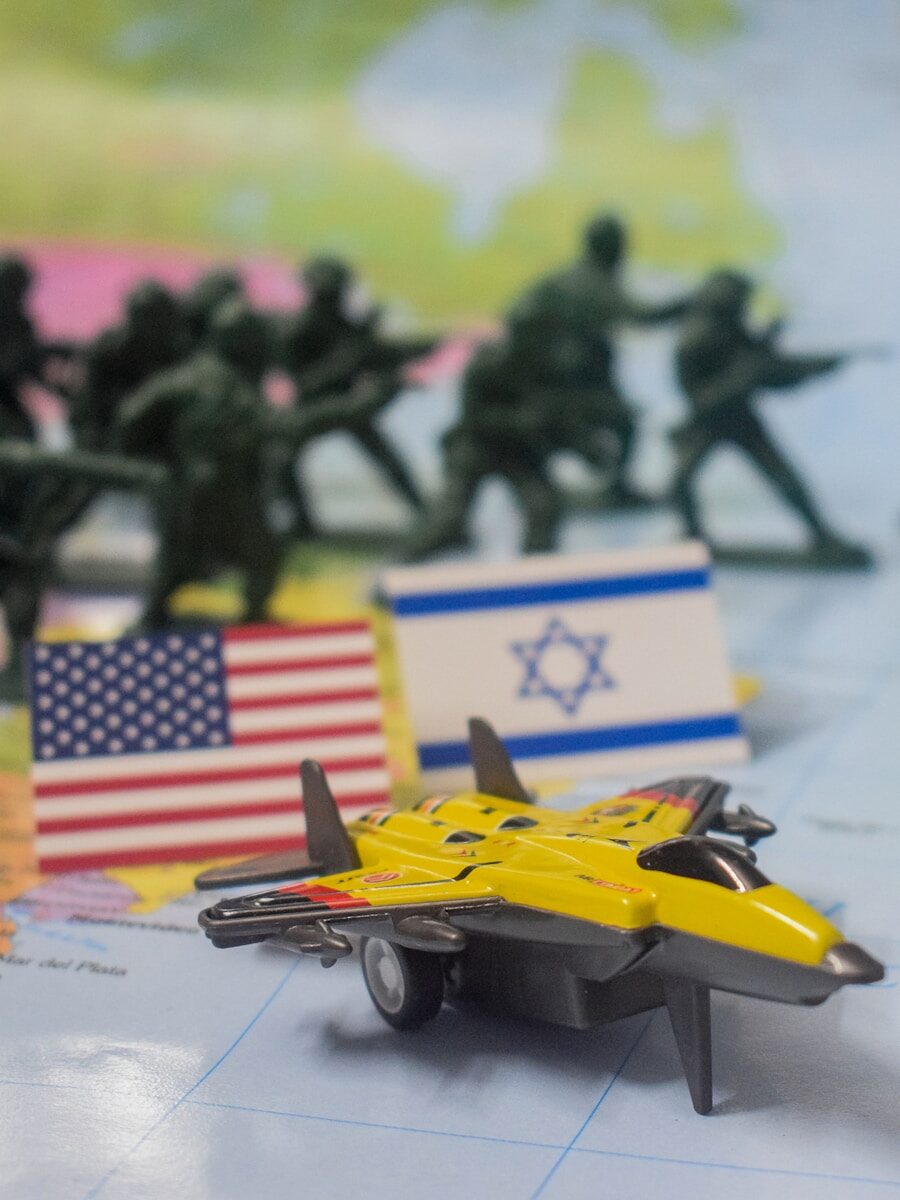
The war between the United States and Iran is terrifying. As the world oil prices seesaw with every missile strike and counter-strike, a deeply uncomfortable question emerges from the smoke: Could this be a blessing in disguise for the global fight against climate change?
At first glance, the question is almost profane. War is a catalyst for ecological devastation, not salvation. The carbon footprint of a single armored division is staggering. The burning of oil fields, the destruction of infrastructure, and the redirection of resources toward munitions and away from green innovation is a catastrophic setback for environmental progress. To call any war a “blessing” is to ignore the immediate, scorched-earth reality of its impact.
Yet, the geopolitical calculus of the US-Iran conflict forces a harsh, clarifying light on the very foundation of our global economy: our addiction to fossil fuels. In this sense, the conflict is a brutal, real-time audit of our vulnerabilities. As tankers are seized in the Strait of Hormuz and critical infrastructure is threatened, the world is reminded that a significant portion of its lifeblood flows through one of the most volatile chokepoints on the planet. This isn’t an abstract debate about carbon emissions anymore; it’s a tangible threat to national security and economic stability.
This realization is the curse’s potential silver lining. For decades, environmentalists have argued for energy independence on moral and scientific grounds. Now, the national security hawks and the fiscal conservatives are joining the chorus, not because they care about polar bears or melting glaciers, but because they fear supply chain disruption. War makes the theoretical risk of “peak oil” or “geopolitical instability” feel visceral. It strips away the illusion of a stable market and reveals the fossil fuel economy for what it is: a geopolitical hostage situation.
In this context, the argument that conflict incentivises investment in locally sourced renewable energy gains significant traction. Solar, wind, biomass, and geothermal energy are not just “clean”; they are inherently secure. The sun doesn’t send gunboats, the wind doesn’t hold pipelines hostage, and uranium for nuclear power—while itself subject to supply chains—is often sourced from more geopolitically stable allies. The logic is undeniable: the fastest way to render the Strait of Hormuz irrelevant to your survival is to stop needing the oil that passes through it.
We are already seeing this narrative take hold. The European Union, caught between American pressure and reliance on Middle Eastern energy, has doubled down on its Green Deal. Nations like Germany and Japan, with few domestic fossil resources, view the acceleration of renewables not just as an environmental policy, but as a fundamental strategy for national sovereignty. The war rhetoric, therefore, acts as a massive, unplanned marketing campaign for energy independence. It frames the solar panel on your roof not as a hippie indulgence, but as an act of patriotic defiance against global instability.
But we must tread carefully here. To accept conflict as an “incentive” is a dangerous path. The history of energy is written in blood and oil, and it is a fool’s errand to rely on tragedy to drive progress. The immediate effect of war is rarely a surge in green investment; it is a frantic scramble to secure existing fossil fuel supplies. Governments, panicked by price spikes, may temporarily double down on domestic drilling and coal mining, further entrenching the very systems we need to dismantle. The curse is that war clouds our long-term vision with short-term survival instincts.
So, is the US-Iran conflict a blessing or a curse? It is both. It is a curse for the climate in its immediate aftermath and a potential curse if it leads to a desperate, planet-scorching dash for any available energy. But it is a potential blessing if it finally breaks the cognitive dissonance of the fossil fuel era. It forces the world to acknowledge that our reliance on a finite resource controlled by unstable regions is a suicidal economic policy.
The tragedy is that we are learning this lesson through the lens of conflict rather than reason. The ideal path to a green future was always one of peaceful, rational transition. But if we are condemned to learn through crisis, let us ensure we learn the right lesson. The fire of war in the Middle East must illuminate the path toward the quiet, resilient hum of a wind turbine at home. It must show us that true energy security isn’t found at the barrel of a gun, but in the inexhaustible power of the earth beneath our feet and the sky above our heads. The question is whether our panic will be smarter than our foresight.
The author is affiliated with the Tan Sri Omar Centre for STI Policy Studies at UCSI University and is an Adjunct Professor at the Ungku Aziz Centre for Development Studies, Universiti Malaya. He can be reached at ahmadibrahim@ucsiuniversity.edu.my.