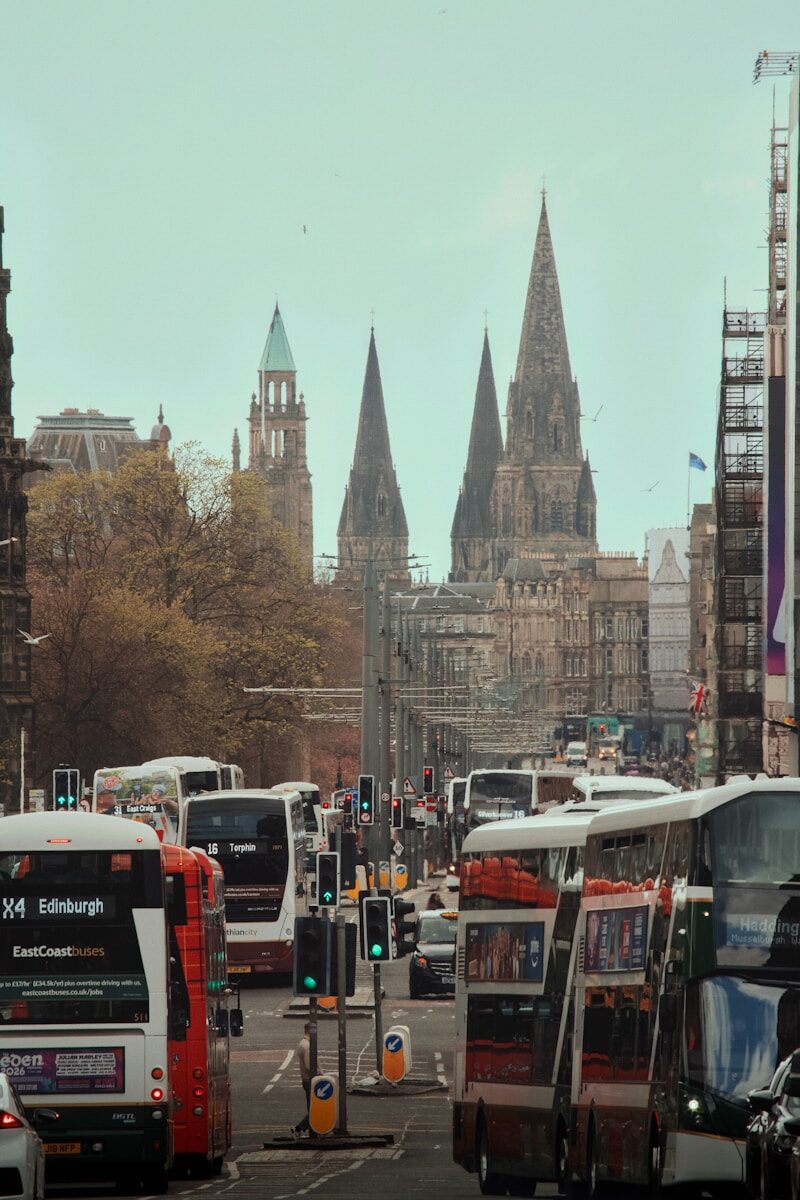
Why the world’s public transport is stuck in the same old rut
By Professor Dato Dr Ahmad Ibrahim
The Norman Broadbent Global Public Transport Outlook 2026 noted that “decision making in public transport often slows as ownership fragments across sponsors, operators, authorities and delivery bodies”. When a bus lane project requires sign-off from transport agencies, local councils, environmental authorities, and finance ministries, the result is not rigorous oversight—it is paralysis. This fragmentation creates what researchers call the “implementation gap.” In New Zealand, a study published in Case Studies on Transport Policy found that even when strategic goals are aligned at the policy level, “funding misalignment and governance complexities hinder active travel collaboration”. The disconnect between grand visions and delivery pathways means sustainability strategies remain stuck on paper.
It is even more complicated in the United States, where the research reveals that 66 percent of major transit projects cross multiple municipal boundaries. This creates a political free-for-all. Mayors and city councillors with no official role in project governance nonetheless wield enormous informal power, leveraging relationships to demand changes that add millions to budgets and years to timelines. One Minneapolis mayor successfully argued for a rerouting that added $200 million to the Metro Green Line’s cost.
If governance is the first bottleneck, technology is the second. The problem is not that we lack sophisticated tools. It is that the public sector, which runs most of the world’s mass transit, is stuck in the technological dark ages. As Amos Haggiag of Optibus argues forcefully in METRO Magazine, “many transit authorities instead rely on decades-old software and manual practices”. While venture capitalists pour billions into autonomous vehicles and ride-hailing apps—services that primarily serve the wealthy and worsen congestion—the systems that move the masses are managed with spreadsheets and guesswork. This technological deficit has real consequences. Poor scheduling, unreliable real-time information, and suboptimal route planning drive passengers into the waiting arms of Uber and Grab. A University of California-Davis study found that up to 61 percent of ride-hailing trips replaced public transport, walking, or cycling. The technology gap is not just an inconvenience; it is actively cannibalising the ridership base that sustains public transport.
Yet there is hope. The European Union’s UPPER project is demonstrating what happens when cities embrace digitalisation. By deploying intelligent transport systems, GPS tracking, and data-driven planning, cities like Budapest have redesigned their networks to respond to actual demand patterns. The lesson is simple but profound: you cannot manage what you cannot measure.
Perhaps the most fascinating insight from recent research challenges our fundamental assumptions about how transport should be organised. A groundbreaking study published in Nature Communications analysed more than 7,000 bus routes across 36 cities and reached a startling conclusion: the informal minibus networks of the Global South are often more efficient than the centrally planned systems of the Global North.
This is not to romanticise the sector. The Nature Communications study acknowledges that informal services often suffer from poor vehicle safety, unreliable scheduling, and minimal driver training. But the structural efficiency of their route networks suggests that simply bulldozing these systems in favour of rigid, centrally planned alternatives is a mistake. The goal should be integration and formalisation that preserves adaptability while improving safety and reliability.
Underpinning all these challenges is a crisis of leadership and institutional memory. The Norman Broadbent report makes a pointed observation: transport organisations are finally recognising that “succession planning must be treated as a programme risk, not an HR afterthought”. When a visionary director leaves and takes decades of relationships and tacit knowledge with them, projects stall. When political cycles turn over every four or five years, long-term programmes are chopped and changed beyond recognition.
Copenhagen, widely regarded as a sustainability pioneer, illustrates the tension. Research on the city’s Sustainable Urban Mobility Plan found that even in this most favourable of environments, “conflicting political priorities and car dominance hamper ambitious planning”. If Copenhagen struggles to maintain momentum, what hope for cities without its institutional capacity and civic consensus?
The bottlenecks in public transport are not technical problems awaiting a technological magic bullet. They are human problems: fragmentation, inertia, short-termism, and the eternal difficulty of getting different people with different incentives to row in the same direction. The solutions, therefore, must be equally human. They require governance reforms that clarify accountability without stifling local input. They demand investment in the boring but essential work of data systems and digital management. They call for humility in the face of informal systems that have evolved to meet needs that central planners cannot see. And above all, they require a commitment to leadership continuity and institutional memory that transcends electoral cycles.
The author is affiliated with the Tan Sri Omar Centre for STI Policy Studies at UCSI University and is an Adjunct Professor at the Ungku Aziz Centre for Development Studies, Universiti Malaya. He can be reached at ahmadibrahim@ucsiuniversity.edu.my.