By Shazanah Nurr Syanim Kahimin and Hasmahzaiti Omar
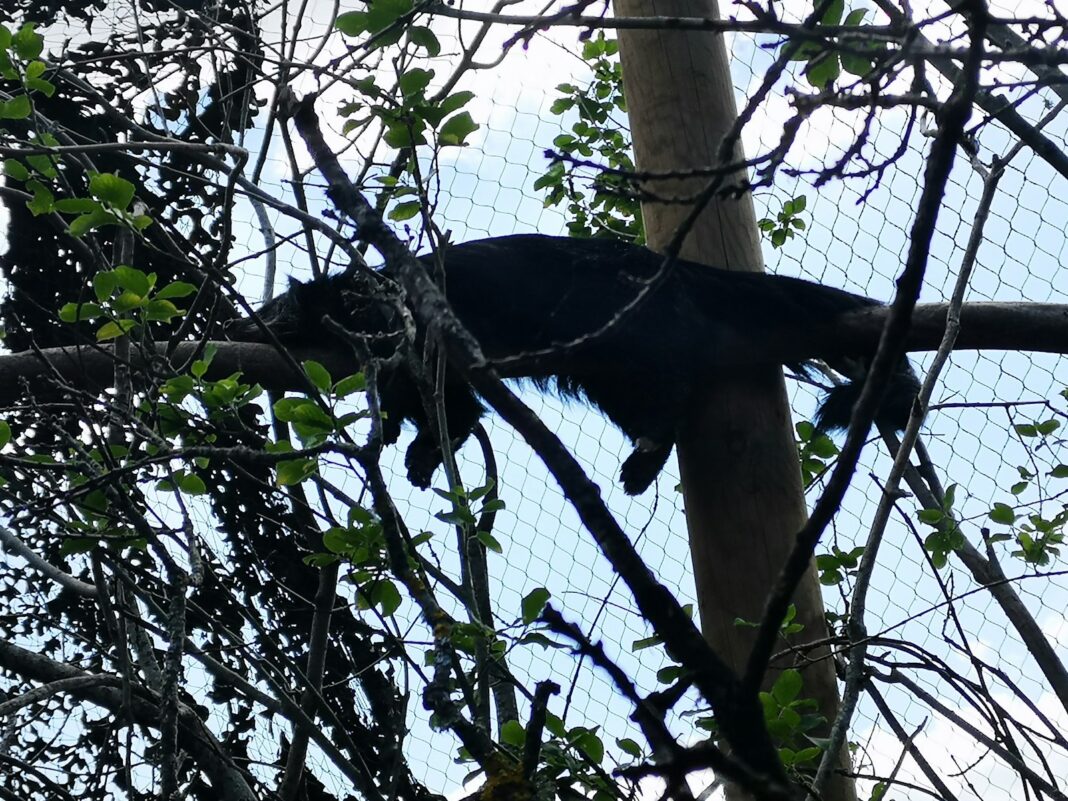
In recent years, sightings of civets roaming through parks, residential neighbourhoods, and even KLCC Park have become increasingly common. Although such encounters are no longer unusual, they often evoke mixed reactions among the public, ranging from excitement and curiosity to fear and concern. Videos of these encounters frequently go viral on social media, transforming moments of wildlife presence into entertainment or novelty. However, beneath this growing fascination lies an important question that warrants serious consideration: are civets truly meant to live in our cities?
Civets are nocturnal wild mammals belonging to the family Viverridae. They are naturally found in forests, plantations, and rural landscapes where vegetation cover and food sources are abundant. In Malaysia, several civet species exist including the Asian Palm Civet (Paradoxurus hermaphroditus) and the Malayan Civet (Viverra tangalunga). These species evolved to survive independently of human presence, relying on natural habitats to forage, hide, and reproduce. Although sightings in semi- urban and urban areas are increasing, this does not indicate that civets are well adapted to city life. Instead, their presence in human dominated spaces often reflects environmental pressure, habitat loss, and shrinking forest areas rather than successful adaptation.
The question then arises: why do civets continue to appear in urban areas? Rapid urban expansion has pushed wildlife out of their natural habitats and into human settlements. Forest fragmentation caused by infrastructure development, housing projects, and road construction reduces suitable living spaces for wildlife. At the same time, cities provide easy access to food sources such as fruit trees in gardens, unsecured household waste, and even intentional feeding by humans. Over time, repeated exposure to people can cause civets to lose their natural fear, resulting in more frequent human–wildlife encounters and increasing the likelihood of conflict.
Unfortunately, some individuals perceive civets not as wild animals but as potential pets. Social media has played a major role in shaping this misconception by portraying wildlife encounters as harmless or entertaining. Short videos often show civets appearing calm or docile, creating the false impression that they can be domesticated. In reality, civets are not domesticated animals like cats or dogs. Feeding, handling, or keeping them in captivity disrupts their natural behaviour and increases their dependence on humans, making eventual release into the wild difficult or impossible.
Life in captivity can be extremely stressful for civets. Confined spaces restrict their movement and prevent essential behaviours such as roaming, climbing, and foraging. Improper diets that do not reflect their natural feeding habits can cause malnutrition or digestive problems. Additionally, a lack of environmental stimulation and constant human interaction may lead to anxiety, aggression, or abnormal behaviours. What may appear to humans as calmness or obedience is often a sign of fear, stress, or exhaustion. Keeping civets as pets compromises their welfare and ignores their biological and ecological needs.
Beyond animal welfare concerns, close interactions between civets and humans also pose risks to public safety. When stressed or threatened, civets can become unpredictable and may scratch or bite in self-defence. There is also the risk of disease transmission, particularly zoonotic diseases, when wild animals are kept in close contact with humans. In many cases, when owners are no longer able to manage these animals, they choose to abandon them rather than surrender them to trained wildlife professionals. Such abandonment further increases the risk of injury, disease spread, and ecological disruption.
Removing civets from their natural habitats and encouraging their presence in cities disrupts ecosystems and wildlife populations. Civets play important ecological roles, such as seed dispersal and controlling insect populations. Normalising the keeping of wild animals can also fuel illegal wildlife trade and undermine conservation efforts. Urban wildlife disturbances affect not only individual animals but also contribute to ecological imbalance and increased human–wildlife conflict.
Although civets are increasingly seen in urban areas, this does not mean they belong there. True coexistence requires respecting wildlife boundaries and understanding that wild animals are not meant to be pets or entertainment. By observing civets from a distance, securing waste properly, and allowing them to remain wild, we protect both their welfare and our communities. Allowing wildlife to stay wild is ultimately the most responsible and sustainable choice we can make.
Shazanah Nurr Syanim binti Kahimin is a Bachelor of Ecology & Biodiversity Student and Associate Professor Dr Hasmahzaiti Omar is a Lecturer of the Ecology & Biodiversity Program at the Institute of Biological Sciences, Universiti Malaya. They may be reached at zaiti_1978@um.edu.my