After the report cards were forgotten
By Ng Kwan Hoong
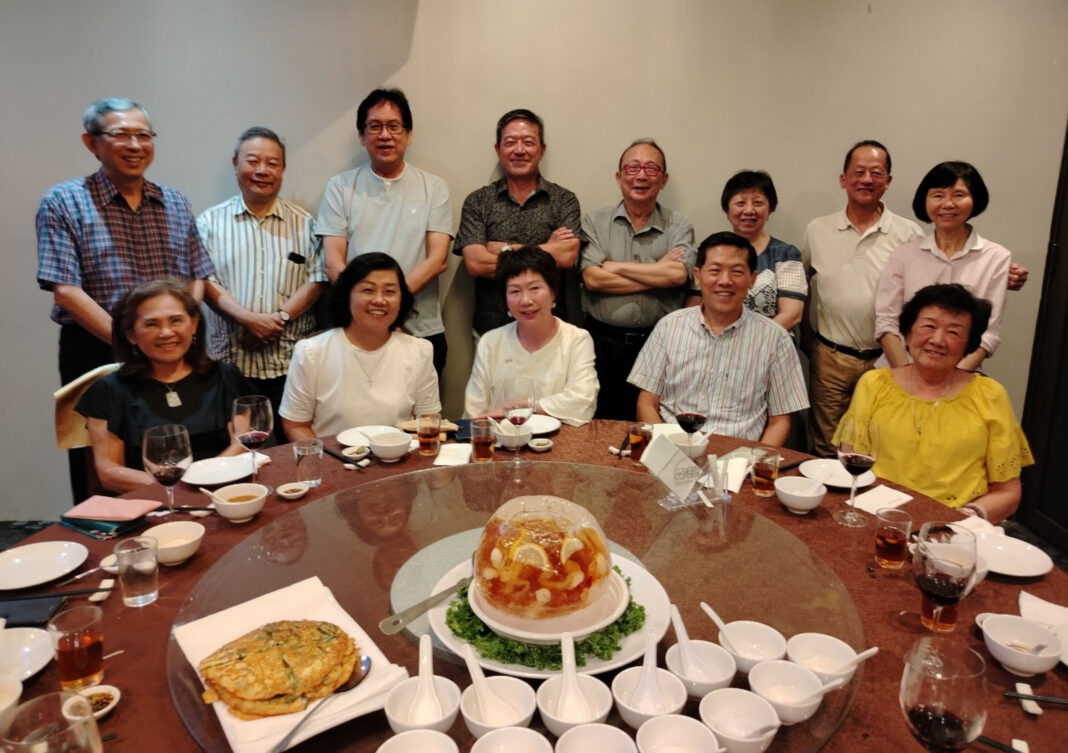
More than fifty years have passed since we graduated from Form Six at Methodist Boys’ School (MBS), Kuala Lumpur, in 1974. Like many friendships formed in youth, ours drifted quietly apart as careers, families and responsibilities took us in different directions. I, too, lost touch with many of my former classmates over the years. When I recently found my way back to the group, however, it felt remarkably easy to settle into conversations that had simply been waiting to continue.
Our reunions are usually centred around food. That has become something of an unspoken tradition. Some of us organise trips together to explore new places and discover good restaurants. Others who now live overseas make a point of joining whenever they return to Malaysia. Looking around the table, I see doctors, engineers, architects, company directors, accountants, pilots, professors, scientists and businessmen. These are careers built over decades, each representing a different journey through life. Yet beneath those titles, I still recognise the schoolboys I first knew more than half a century ago.
As the conversations unfolded that afternoon, I found myself thinking about how differently we viewed school when we were seventeen or eighteen years old. Like most students, we believed that examinations were the centre of everything. Report cards mattered. Grades mattered. University admission mattered. It was easy to imagine that these would become the defining measures of our future.
Looking back now, I realise that while our education certainly prepared us for universities and professions, something else was taking place alongside the formal lessons, almost unnoticed at the time. Albert Einstein is often credited with saying that education is what remains after one has forgotten what one learned in school. Whether or not those were his exact words, the thought has stayed with me: perhaps education is ultimately what remains after we have forgotten the marks we received, the examinations we sat and much of what we were required to memorise.
Methodist Boys’ School brought together students from remarkably different backgrounds. Some had been there since Standard One, while others, like me, joined later. Some came from professional or business families. Others were the sons of hawkers and small traders. A few began their days before sunrise helping their parents prepare food for sale before coming to school, while others spent their afternoons assisting at family businesses after classes ended.
At that age, these differences rarely occupied our thoughts. We simply accepted one another as classmates. We encountered different cultures, different family circumstances and different ways of looking at the world, not through formal lessons but through ordinary conversations, shared experiences and friendships that grew almost naturally. We were learning from one another every day.
The school itself was modest by today’s standards. There were no air-conditioned classrooms or sophisticated facilities. Some of us walked to school, while others relied on public buses. We accepted these things without complaint because they were simply part of everyday life. What has remained with me all these years is not the lack of comfort, but the richness of the relationships that developed within those surroundings.
Our principals, Mr T. Mori, Mr Tan H.H. and Mr Yong C.S., were remembered for their strict discipline. As boys, we regarded them with more than a little apprehension. Being called to stand before the entire school assembly was something every student hoped to avoid. Time, however, has a way of changing one’s perspective. Looking back, I now recognise that behind that firmness was a deep commitment to shaping young lives with integrity and responsibility.
The same reflection comes to mind whenever I think of our teachers. Ms Moey Y.L., Mrs E. Ong and Mr Loo W.Y. had themselves only recently graduated from university when they began teaching at MBS. While we were taking our first uncertain steps towards adulthood, they were taking their first steps as educators. We probably appreciated their lessons then. Today, I appreciate something more enduring: the patience, encouragement and quiet confidence with which they invested themselves in a generation of students whose futures they could not possibly have imagined.
As our reunion continued, I noticed something that would probably have surprised our younger selves. No one asked who had scored the highest marks in school. Nobody tried to remember examination rankings or compare academic achievements. Instead, we spoke about our children and grandchildren, places we had travelled, books we had read, health, retirement and the unexpected turns that life had taken. We laughed at stories that had somehow survived the passing of fifty years, even when we could no longer remember many of the details surrounding them.
That conversation made me realise how differently we measure success at different stages of life. The report cards that once seemed so important have long since disappeared into forgotten drawers, and many of us would struggle to remember the grades we worked so hard to obtain. Yet the friendships formed during those same years have endured with remarkable resilience, quietly accompanying us through careers, marriages, parenthood, retirement and, for some, even the loss of spouses and lifelong companions.
Perhaps that is because school was doing much more than preparing us for examinations. Without announcing it, it was introducing us to people who would broaden our understanding of the world, challenge our assumptions and, in some cases, remain part of our lives for decades. Those lessons never appeared in the curriculum, nor were they reflected in our academic results, but they have proved to be among the most enduring gifts of our education.
Before we left, someone suggested the venue for our next gathering. There was immediate discussion, a little friendly disagreement and, as always, plenty of laughter. Watching everyone around the table, I found myself thinking that although we had all travelled very different paths, something was reassuring about returning to the place where so many of those journeys first began.
Looking back, I realise that Methodist Boys’ School certainly prepared us for examinations, universities and careers. But after the report cards were forgotten, it was the friendships, the shared experiences and the quiet lessons learned from one another that remained.
Perhaps that is what education finally is: what remains after the report cards have been forgotten.
The author is an Emeritus Professor of Biomedical Imaging at the Faculty of Medicine, Universiti Malaya. A 2020 Merdeka Award recipient, he is a medical physicist by training but also enjoys writing, drawing, listening to classical music, and bridging the gap between older and younger generations. He may be reached at ngkh@ummc.edu.my