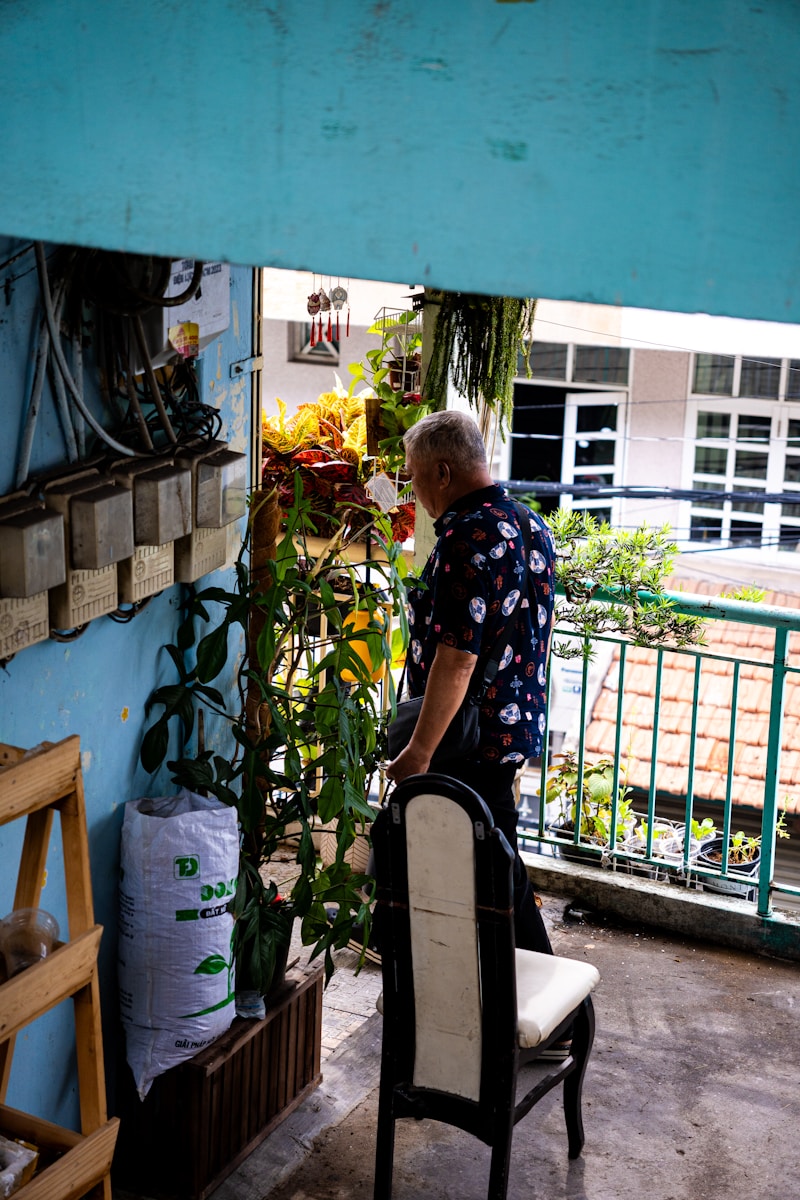
The hidden costs of aging at home
By Adriel Bradley Jaring
After thirty years of paying off a housing loan, retirement should feel like the finish line. You expect to rest in the sanctuary you built. Yet for many Malaysian seniors, the home has become a financial trap. This is the silent crisis brewing behind the high-rise walls of our strata developments. While we often discuss the “sandwich generation” or the depletion of EPF savings, we rarely discuss the brutal reality of what it actually costs to stay in your own home when you are old, frail and earning zero income.
By 2030, according to many estimates, we will be an aged nation. Culturally, the solution has always been simple. Parents live with children or stay in the family home. The concept of “Aging in Place” is a deep-seated desire for nearly every Malaysian parent. Nobody wants to be uprooted to an institution.
However, the housing landscape has shifted. A significant portion of our elderly population now lives in strata schemes such as apartments, condominiums and flats. Unlike the landed “kampung” houses of the past, these vertical villages come with a monthly price tag. The maintenance fee and the sinking fund.
This creates a cruel paradox. We have a generation of retirees who are “asset rich” because they own a property worth RM400,000 or more but “cash poor” because they survive on a dwindling EPF payout.
They own the roof over their heads yet they live in fear of the management committee. If the lift breaks down, the cost to fix it comes from the sinking fund. If that fund is insufficient, fees rise. If the elderly cannot pay, they face penalties or cut utilities. The home that was supposed to be their sanctuary becomes a source of chronic anxiety.
This specific challenge is why the research by Dr. Amalina Azmi, a senior lecturer at the Department of Real Estate, Faculty of Built Environment, Universiti Malaya, is so important. Her work, entitled “The Strata Housing Attributes for Elderly to Age in Place” provided the essential roadmap for this issue.
She has extensively mapped out the “hardware” or the physical attributes required for safe aging. Through her findings, we know exactly what an elderly-friendly home looks like. It requires specific features such as 1.2-meter wide doors for wheelchairs, anti-skid flooring to prevent fatal falls, and panic buttons in master bedrooms.
However, her findings also opened the door to a critical follow-up question. If we know what the attributes are, how do we ensure the elderly can afford them?
Now this is where the new research under the Bantuan Kecil Penyelidik (BKP) grant steps in. It aims to bridge the gap between Dr. Amalina’s physical checklist and the financial reality of the average Malaysian retiree.
The study asks the uncomfortable questions. Who pays for the retrofitting of a 20-year-old apartment to make it align with Dr. Amalina’s safety standards? How do we support a retiree whose pension covers food but not the rising service charges required to maintain safe lifts and security? The previous research gave us the design for a safe home. This new research aims to find the wallet to pay for it.
The project highlights that financial security for the elderly is no longer just about having enough money for groceries. It is about “Tenure Security.” It identifies that without specific financial interventions the physical attributes of a safe home remain a luxury for the rich rather than a standard for the many.
If an elderly person cannot afford to fix a broken lift, they become prisoners in their own high-rise units. If they cannot afford anti-slip tiles, a bathroom visit becomes a life-threatening hazard. This financial insecurity degrades their quality of life and leads to isolation.
So, whether you are a policymaker, a child of aging parents or a future retiree, this should serve as a wake-up call. We need to advocate for solutions that go beyond the EPF. We need mechanisms that recognize housing costs as a core component of healthcare. If we want our parents to age with dignity, we must ensure their homes are not just buildings of brick and mortar but fortresses of financial security. We must ensure that “Aging in Place” does not become “Trapped in Place.”
The author is an undergraduate student of Universiti Malaya, taking an elective university course entitled “Introduction to Journalism and Storytelling in Digital Age”, and may be contacted via nahrizuladib@um.edu.my