When tradition affects your oral health
By Assoc. Prof. Dr. Nor Azlida Binti Mohd Nor and Dr. Goh Yet Ching
In many parts of Asia, including Malaysia, betel quid chewing is a long-standing cultural tradition. Often shared during social gatherings or used as a personal habit, it carries deep cultural meaning. For many, it represents culture, tradition, and social connection. However, behind this practice lies a growing health concern that deserves more attention.
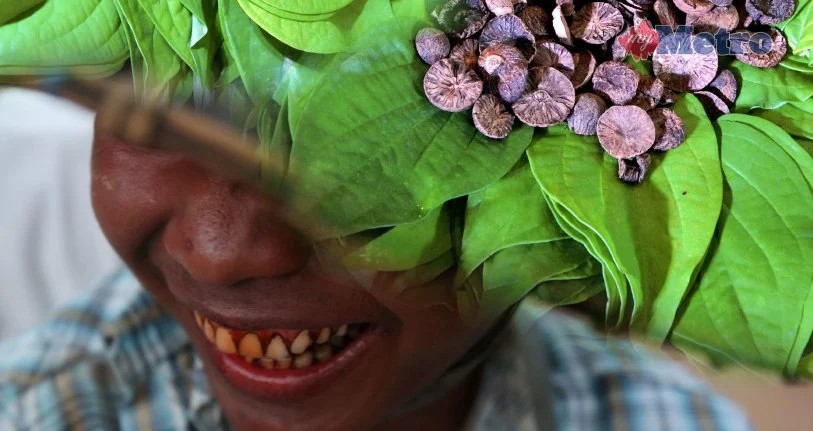
Betel quid, commonly known as “sirih” in Malaysia is a mixture that typically includes betel leaf, areca nut (pinang), slaked lime, and sometimes tobacco. The ingredients can vary depending on local customs and personal preference. Some people chew it fresh, while others prefer dried or commercially prepared versions. The addition of tobacco increases its harmful effects. The mixture exposes the oral tissues to multiple carcinogens, leading to greater cellular damage, faster disease progression, and a significantly higher risk of oral cancer compared to non-tobacco betel quid use.
In Malaysia, betel quid chewing has been practiced for generations, especially among indigenous population and older communities. Studies in the region show that the habit is still present, with some surveys reporting that up to 10–12% of men and as high as 30–40% of women in certain Malaysian communities chew betel quid. Areca nut, the key components of the betel quid is classified as Group 1 carcinogen by the International Agency of Research on Cancer (IARC).
Despite its cultural roots, betel quid chewing poses serious health risks, especially to the mouth. Regular chewing can cause staining of the teeth, bad breath, and irritation of the gums. Over time, more serious conditions can develop. One of the most common is oral submucous fibrosis, where the lining of the mouth becomes stiff, making it difficult to open the mouth or eat comfortably. It is important to highlight that oral submucous fibrosis is listed in the World Health Organization (WHO) classification of oral potentially malignant disorders (OPMDs). These conditions are of concern because they have the potential to progress into oral cancer if left undetected or unmanaged.
More concerning is the strong link between betel quid chewing and oral cancer. The areca nut itself is classified as a cancer-causing substance. Research shows that people who chew betel quid have about 7 to 8 times higher risk of developing oral cancer compared to non-chewers. Research in Malaysia has consistently found that many oral cancer patients have a history of betel quid chewing, highlighting it as a major risk factor.
Addressing this issue requires a community-based approach, with public awareness as a key priority. Many individuals remain unaware of the risks or continue to believe that certain traditional practices are harmless. The Ministry of Health has introduced programmes focusing on the early detection and prevention of oral cancer, particularly among high-risk groups. In support of these efforts, the Faculty of Dentistry, Universiti Malaya (UM) has been actively involved in oral health promotion and community outreach initiatives, particularly among underserved and indigenous communities in Peninsular Malaysia.
For example, a recent outreach programme involved UM staff and students working with the Temiar Orang Asli community in Sungai Siput, Perak. To be effective, prevention campaigns must be delivered in simple and relatable ways, leveraging community leaders, schools, and local healthcare providers. Health messages should also be culturally sensitive and communicated through trusted community channels to ensure better acceptance and impact.
Equally important is support for quitting. Betel quid chewing is often deeply rooted in daily life and social identity, making it difficult to stop. Community-based programmes, counselling, and culturally appropriate alternatives can help individuals reduce or quit the habit. Respecting tradition while protecting health is not always easy. But with better awareness, early detection, and community support, Malaysians can continue to honour their cultural practices while making safer choices for their future.
Assoc. Prof. Dr. Nor Azlida Binti Mohd Nor is from the Department of Community Oral Health & Clinical Prevention, Faculty of Dentistry, Universiti Malaya, and can be reached at azlida@um.edu.my, while Dr. Goh Yet Ching is from the Department of Oral & Maxillofacial Clinical Sciences, Faculty of Dentistry, Universiti Malaya, and can be reached at gohyetching@um.edu.my.