The blue shirt I never wore
By Ng Kwan Hoong
As a schoolboy, there was one shirt I desperately wanted to wear.
It was not particularly fashionable. In fact, it was simply a blue school uniform shirt. But in my secondary school, that blue shirt belonged to the librarians. They stood out from the rest of us, and to me they represented something rather special. I hoped that one day I would be chosen to wear it too.
I never was. At the time, it felt like a small disappointment. Looking back now, however, I realise that not wearing the blue shirt mattered very little. The librarians I admired all those years ago gave me something far more enduring than a different coloured uniform: They quietly taught me to keep looking.
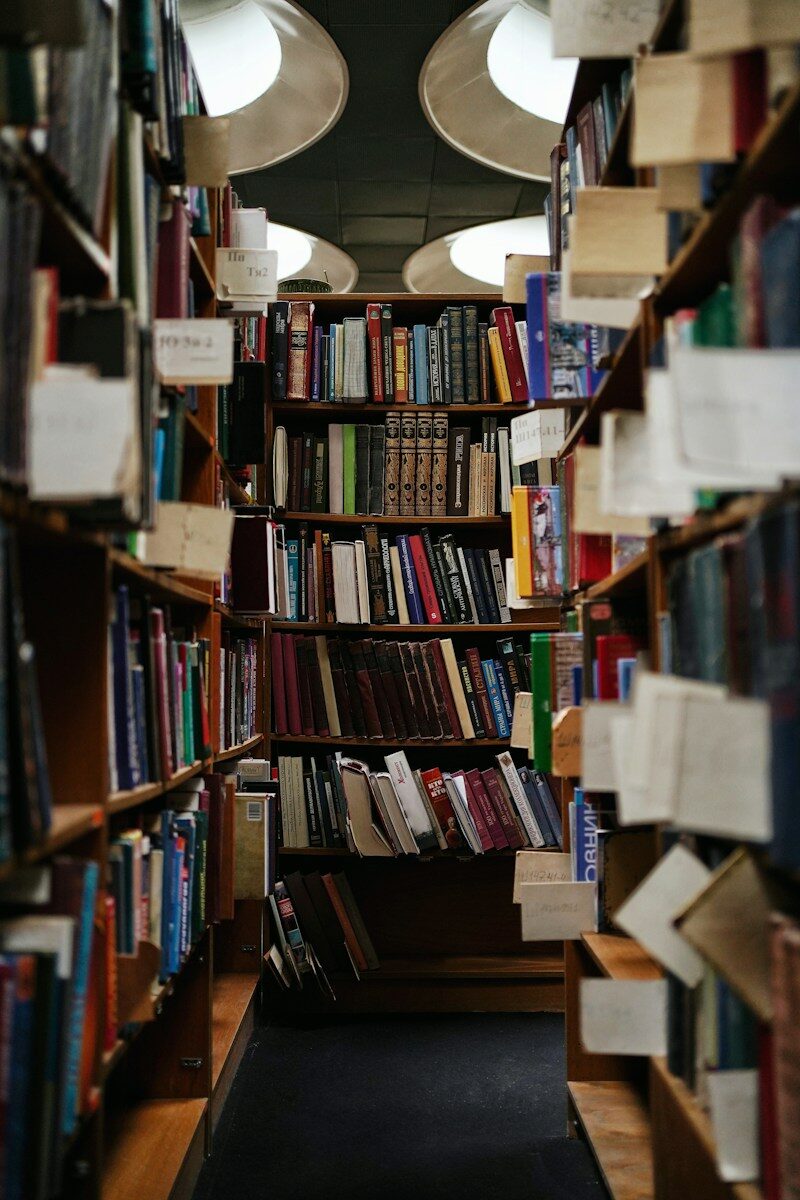
Even as a young student, I was happiest whenever I found myself surrounded by books. Storybooks, science fiction, comics, travel writing, history and geography all competed for my attention. Among my favourite places was the reference section, especially the Encyclopaedia Britannica. I could spend hours reading its entries, not because I was searching for a particular answer, but because one topic would naturally lead me to another. Curiosity seemed to have a way of choosing its own direction.
There was no internet then. There were simply books, curiosity and time.
When I entered Universiti Malaya, that habit continued almost without my noticing. The Main Library felt enormous, with its shelves stretching across three floors. I often arrived looking for a particular book or journal, only to leave having discovered several others I had not intended to read. Looking back, I realise the library was quietly teaching me that learning rarely follows a straight line. Sometimes the most valuable discoveries begin with a question we never intended to ask.
Years later, as a lecturer and researcher, the medical library became almost a second workplace. Research was very different in those days. We searched card catalogues, walked patiently through rows of bound journals and photocopied the articles we needed. When a journal was unavailable locally, we submitted requests through the inter-library network and waited, sometimes for weeks, hoping the paper would eventually arrive.
By today’s standards, the process seems slow. Yet I do not remember it as frustrating. I remember it as purposeful.
The librarians were always there to help us navigate the ever-growing world of knowledge. They knew where information might be found, but more importantly, they encouraged us not to stop searching simply because an answer was not immediately available.
Over the years, the library itself continued to evolve. Book talks brought authors into conversation with readers. Exhibitions celebrated not only academic achievements but also photography, art and creative work across the university community. One programme that particularly stayed with me was the Human Library, where instead of borrowing a book, we listened to someone share the story of their own life.
I remember listening to Sister Mathina Bee Gulam, a retired nurse who had served in humanitarian missions and refugee settings. Her experiences could certainly have been written down, but hearing them directly from the person who had lived them was something altogether different. That afternoon reminded me that learning does not exist only between the covers of a book. Sometimes it is found in another person’s experiences, generously shared.
Looking back, I realise these programmes were never simply about expanding library services. They reflected a much deeper understanding of what a library is meant to do. A library is not merely a place where knowledge is stored. It is a place where curiosity continues to grow.
Today, almost every journal article, textbook and scientific paper can be reached within seconds. Information has become astonishingly accessible, and researchers like myself have benefited enormously from these advances. Yet easy access to information does not automatically make us lifelong learners. Information answers the questions we already know to ask. Curiosity encourages us to ask the next question.
That is the quiet lesson libraries have been teaching all along.
As technology changes, libraries will undoubtedly continue to change with it. Shelves may become smaller, digital collections will continue to expand, and new ways of sharing knowledge will emerge. None of these developments concern me particularly. The true measure of a library has never been the number of books it holds, but whether it continues to nurture minds that remain open, inquisitive and eager to learn.
Sometimes I think back to that blue shirt I so badly wanted to wear as a schoolboy. I never became one of the librarians who wore it. Yet, over the course of a lifetime, I have come to appreciate what they quietly represented. They were not simply looking after books. They were looking after something much more precious: a place where generations of students, researchers and readers could continue asking questions long after their formal education had ended.
Perhaps that is why libraries continue to matter so deeply, regardless of how much technology changes. They remind us that learning is never really about reaching the final answer. It is about preserving the desire to keep looking.
The author is an Emeritus Professor of Biomedical Imaging at the Faculty of Medicine, Universiti Malaya. A 2020 Merdeka Award recipient, he is a medical physicist by training but also enjoys writing, drawing, listening to classical music, and bridging the gap between older and younger generations. He may be reached at ngkh@ummc.edu.my.