Why Malaysia needs a natural rubber museum
By Professor Dato Dr Ahmad Ibrahim
I still remember the first day I walked through the doors of the RRIM. For me, it was my first job. It was where I first understood the scale of the industry that built modern Malaysia. Today, that building has been declared a heritage site. And today, it sits neglected. This is more than a story of personal nostalgia. It is a story of national amnesia. And it is a story we must correct before the physical evidence of our greatest economic triumph crumbles into dust.
For those too young to remember, it is difficult to overstate what natural rubber meant to Malaysia. We were not just a producer; we were once the undisputed king of the global rubber trade. Plantations stretched across the peninsula, lifting rural communities and funding the infrastructure of a nation.
But perhaps more importantly, we were leaders in mind, not just in muscle. The RRIM was a global center of excellence. Our researchers pioneered high-yielding clones; our agronomists taught the world how to tap sustainably; our technologists developed new uses for latex that went far beyond tires. We were the Silicon Valley of natural rubber. Today, we no longer lead. Production volumes have slipped. The research edge has dulled. Yet, while we may no longer be number one, we possess something perhaps more valuable in the long run: a story.
We have a story of pain—the hardship of the tapping floor during the Japanese Occupation, and the volatility of commodity prices that broke families. And we have a story of glory—the birth of a middle class, the funding of education, and the scientific breakthroughs that fed the world’s hunger for mobility.
The old RRIM office in Jalan Ampang is the physical embodiment of that dual narrative. It is where the science happened. It is where policies were crafted. It is where the brain of the industry lived. To allow it to rot is to tell the world that we are embarrassed by our past, rather than proud of how we built our present. I believe this site can, and should, be transformed into a world-class Natural Rubber Museum.
Why a museum? Because heritage tourism is one of the fastest-growing segments of the global travel industry. Tourists, especially from Europe and East Asia, are increasingly seeking authentic, educational experiences. They do not just want to shop; they want to understand. A museum dedicated to natural rubber would offer a unique lens through which to view Malaysian history—the colonial economy, the transition to independence, and the rise of industrialization.
Imagine the exhibits: A walk-through simulation of a 1920s plantation. Interactive displays on the chemistry of latex. Stories of the tappers and the scientists. The smell of rubber wood. The sight of vintage machinery. This would not be a dusty archive; it would be a sensory journey. Furthermore, the location is prime. Jalan Ampang is already a corridor frequented by tourists. Integrating a rubber museum into the existing heritage trail of Kuala Lumpur would create a new node of interest.
So, what should the government do? First, secure the structure immediately. Declaring a site “heritage” means nothing if the roof leaks. An emergency allocation must be made to stabilize the building. We cannot curate what has collapsed. Second, commission a feasibility study for a National Rubber Museum. This study should not just look at construction costs, but at the tourism potential, the educational curriculum integration, and the possibility of public-private partnerships. The plantation companies that still thrive today owe their existence to the foundation laid at the RRIM. They should be invited to be stakeholders in preserving that legacy.
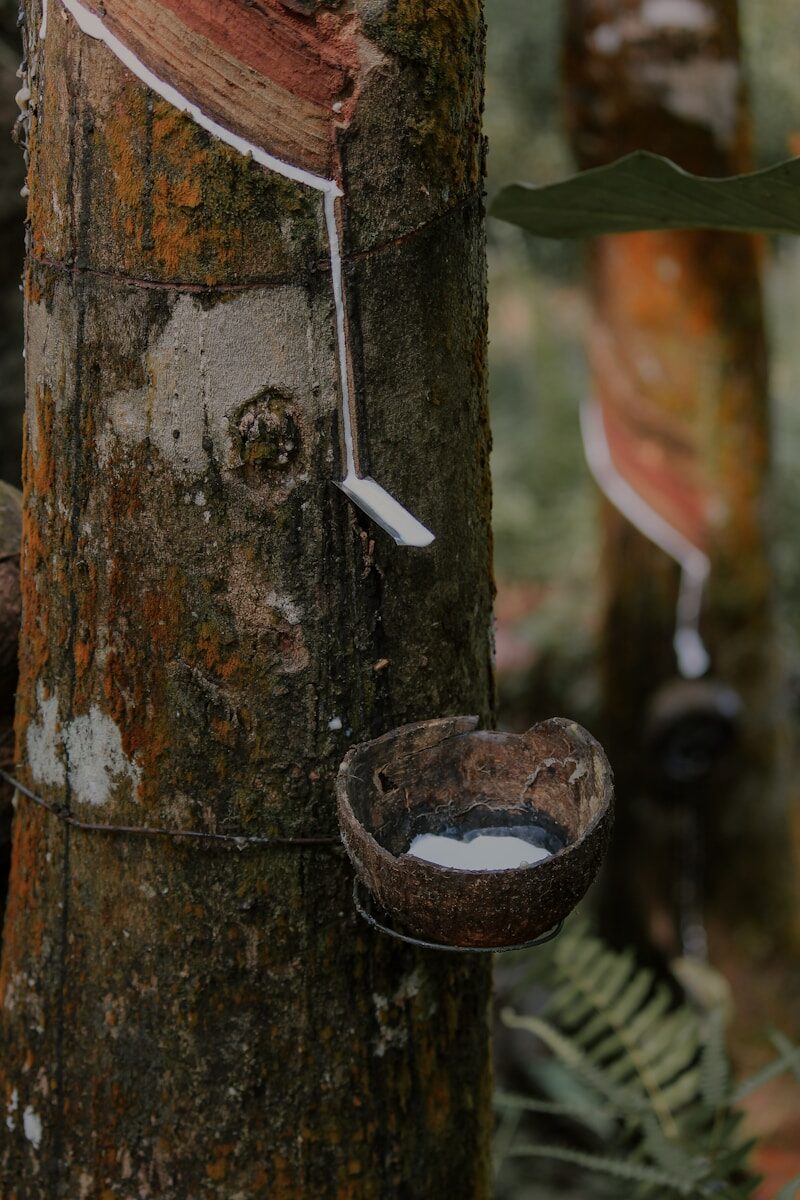
Third, appoint a curator-historian. We need a dedicated professional to begin collecting the artifacts, documents, and oral histories now—before the last generation of pioneering planters and researchers passes away. The stories are leaving us every day. We must capture them. Fourth, link the museum to a living landscape. If possible, a small demonstration plot of rubber trees should be maintained nearby, allowing visitors to see the tree, understand the tapping process, and then walk inside to see the science. This “field-to-factory” narrative is powerful and visually compelling.
We are no longer the world’s largest producer. But we can become the world’s best storyteller of what that production meant. A Natural Rubber Museum at the old RRIM would not just preserve bricks and mortar; it would preserve the memory of toil, the triumph of science, and the foundation of a nation. It is time we gave our rubber industry the memorial it deserves. It is time we opened the doors of my first job to the world.
The author is affiliated with the Tan Sri Omar Centre for STI Policy Studies at UCSI University and is an Adjunct Professor at the Ungku Aziz Centre for Development Studies, Universiti Malaya. He can be reached at ahmadibrahim@ucsiuniversity.edu.my.