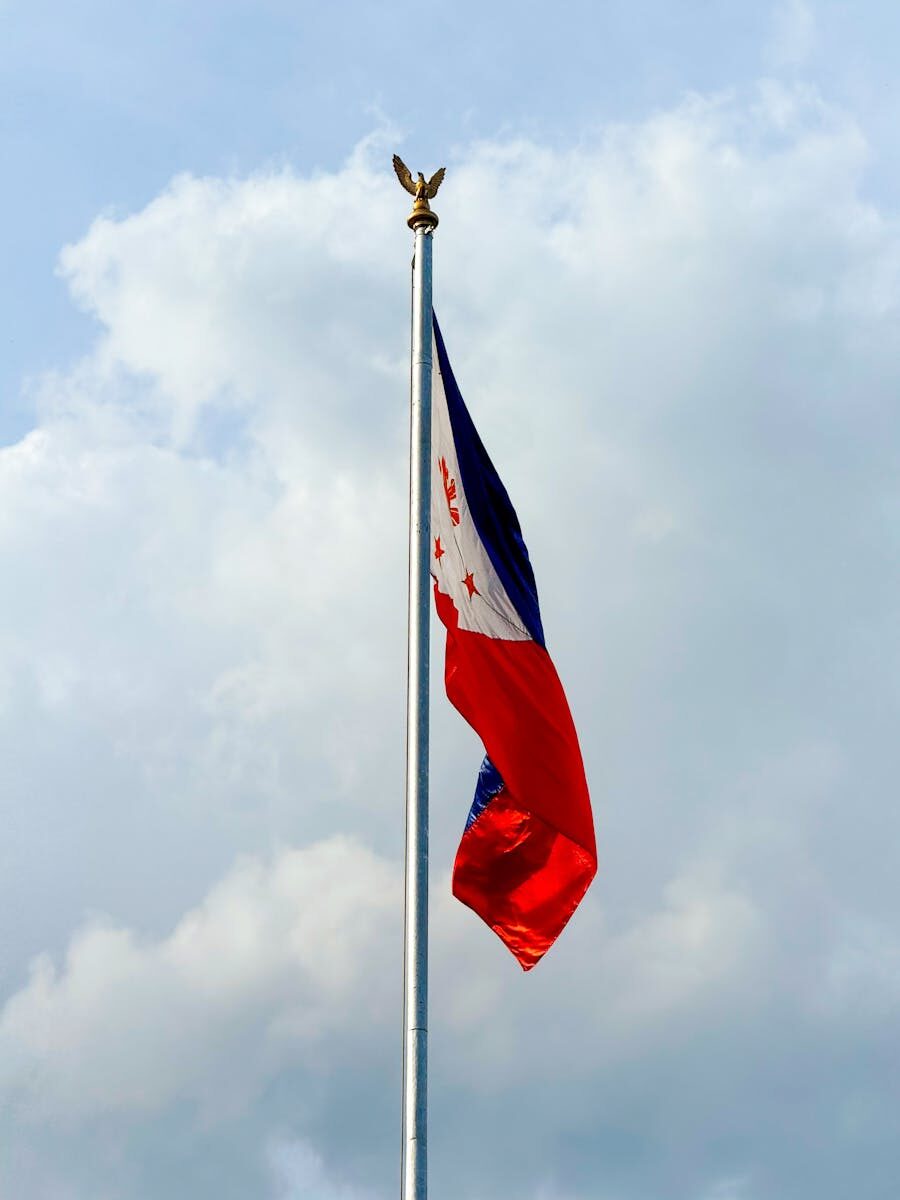
Why the Philippines must restructure or remain fragile
By Professor Dato Dr Ahmad Ibrahim
The Philippines has long been celebrated as Asia’s rising star—a young, English-speaking workforce powering a booming business process outsourcing (BPO) sector, and a diaspora sending home billions in remittances. Yet, as global energy prices spiral in an era of geopolitical turmoil, the facade of resilience is cracking. The truth is uncomfortable: the Philippine economy is structurally fragile, and its current trajectory is unsustainable. If the country does not undertake a radical restructuring of its economic architecture, it will remain perpetually vulnerable—not just to oil price spikes, but to the cascading failures that follow.
The Philippines suffers from a unique paradox: it has among the highest electricity rates in the region, yet it cannot guarantee supply security. Their power grid is a patchwork of aging, imported fossil fuel plants, heavily dependent on coal and natural gas. The Malampaya gas field—which supplies a third of Luzon’s power—is in terminal decline. When global crude prices surge, the cost of imported coal and oil drags the entire economy into inflationary quicksand. They are an archipelago with a fragmented grid, yet rely on centralized, capital-intensive power plants. They boast of “economic growth,” but that growth is powered by industries—BPO, retail, remittance-fed consumption—that are energy-intensive and low in value-added manufacturing.
When energy prices spike, the central bank raises rates to defend the peso, choking small and medium enterprises (SMEs), the real job creators. The result is a cycle of stagflationary pressure that hurts the poor most. The standard policy response to high energy prices in the Philippines has been short-termism: subsidies, fuel vouchers, and tapping the Malampaya fund. These are not solutions; they are painkillers for a chronic disease. Even the much-touted Renewable Energy (RE) Act of 2008, while progressive on paper, has been implemented with such bureaucratic inertia that renewables still account for only about 22% of the power mix, far below the potential of a nation sitting on geothermal fields, solar corridors, and ocean currents.
Resilience is not just about having enough megawatts; it is about restructuring the economy so that it is not held hostage by imported volatility. This requires three paradigm shifts. First, they must treat energy independence as a national security imperative, not a market commodity. This means accelerating the transition to decentralized renewable energy with a sense of urgency. Instead of waiting for foreign investors to build multi-billion peso solar farms, the government should aggressively promote distributed energy—rooftop solar, community-based microgrids—particularly in the Visayas and Mindanao. They need to prioritize energy sovereignty over shareholder dividends. If every industrial zone and major mall generated its own power, that would insulate the economy from grid-level shocks.
Second, the country must diversify the economic base away from consumption-driven services toward energy-sustainable manufacturing. The BPO sector, while valuable, is a fickle tenant; it will relocate to the next country with cheaper power and stable fiber optics. They need to leverage their critical mineral reserves—nickel, cobalt, copper—which are essential for the global green transition. Instead of exporting raw nickel ore to be processed in China, they should offer subsidized, reliable energy zones to process those minerals domestically. This is how to build value-added resilience: by turning the curse of energy dependence into the virtue of industrial integration.
Third, they must democratize the energy grid. A typhoon can knock out transmission lines and paralyze entire islands for weeks. The future of resilience lies in “islanding”—creating localized energy systems that can operate independently of the national grid. The government should transform electric cooperatives into hubs for local renewable generation and storage. When communities control their own power, they are insulated from national price spikes. The reason these solutions have not been implemented is not technical; it is political. The incumbent structure benefits entrenched interests who profit from the status quo of high prices and import dependence. Restructuring the economy to be energy-resilient would require breaking up generation monopolies, rationalizing the tax structure on fuel, and enforcing the Renewable Portfolio Standards that have languished for years.
The spiraling energy prices of today are a stress test that the Philippine economy is currently failing. True resilience is not about weathering the storm; it is about restructuring. For the Philippines, that means an economy built on decentralized, renewable power; on domestic mineral processing; and on a grid that serves the people. The cost of inaction is not just higher electricity bills—it is the continued erosion of competitiveness, the perpetuation of poverty, and the forfeiture of their sovereignty to global energy markets. The question is not whether they can afford to restructure. The question is whether they can afford not to.
The author is affiliated with the Tan Sri Omar Centre for STI Policy Studies at UCSI University and is an Adjunct Professor at the Ungku Aziz Centre for Development Studies, Universiti Malaya. He can be reached at ahmadibrahim@ucsiuniversity.edu.my.