Empowering youth through AI and virtual reality
By Dr. Chew Shin Yi, Rhea Lareina Richard
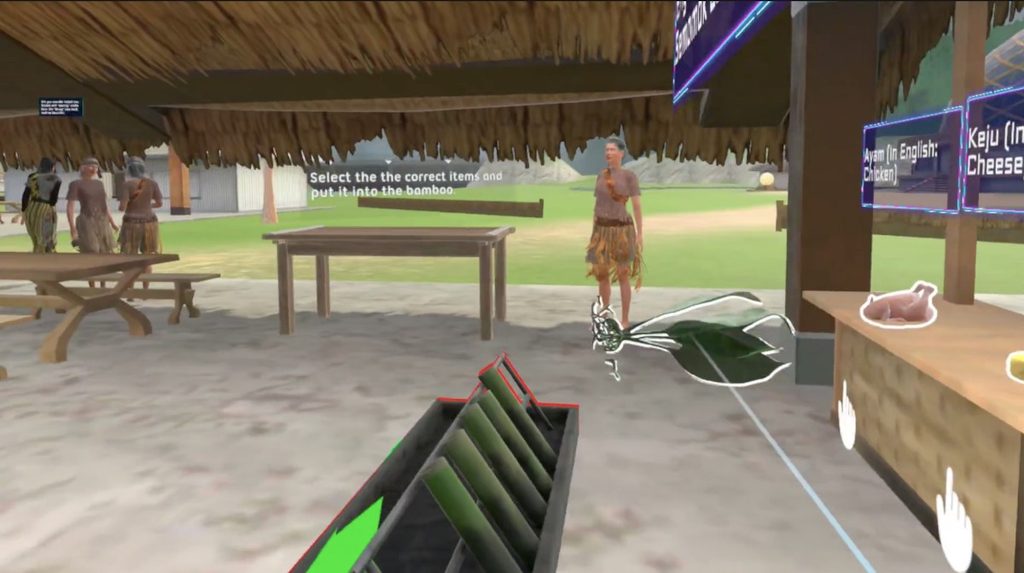
EduSphere is an AI-driven metaverse learning environment developed with support from the British Council’s International Science Partnerships Fund. Led by Dr. Bee Yen Toh of Queen’s University Belfast and Dr. Shin Yi Chew of Universiti Malaya, the project comprises five districts: Tech District, Green Zone, Cultural Quarter, Health Plaza and Business Hub.
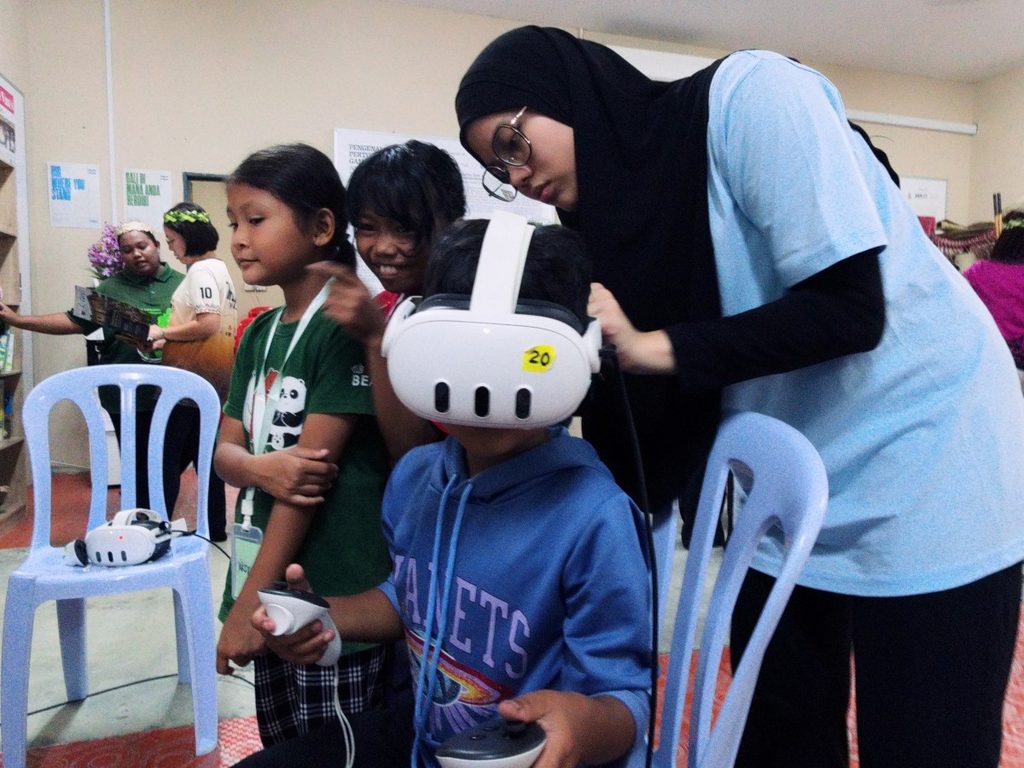
In July, learning content from the Cultural Quarter was trialled using virtual reality (VR) at the Temuan Culture Information Centre (TCIC) in Kampung Orang Asli Pulau Kempas. Designed for local Orang Asli youth aged 11 to 17, the project offered opportunities to explore culturally relevant, AI-driven immersive learning materials. It also promoted service learning among university undergraduates, enabling them to apply their academic knowledge and contribute to the community.
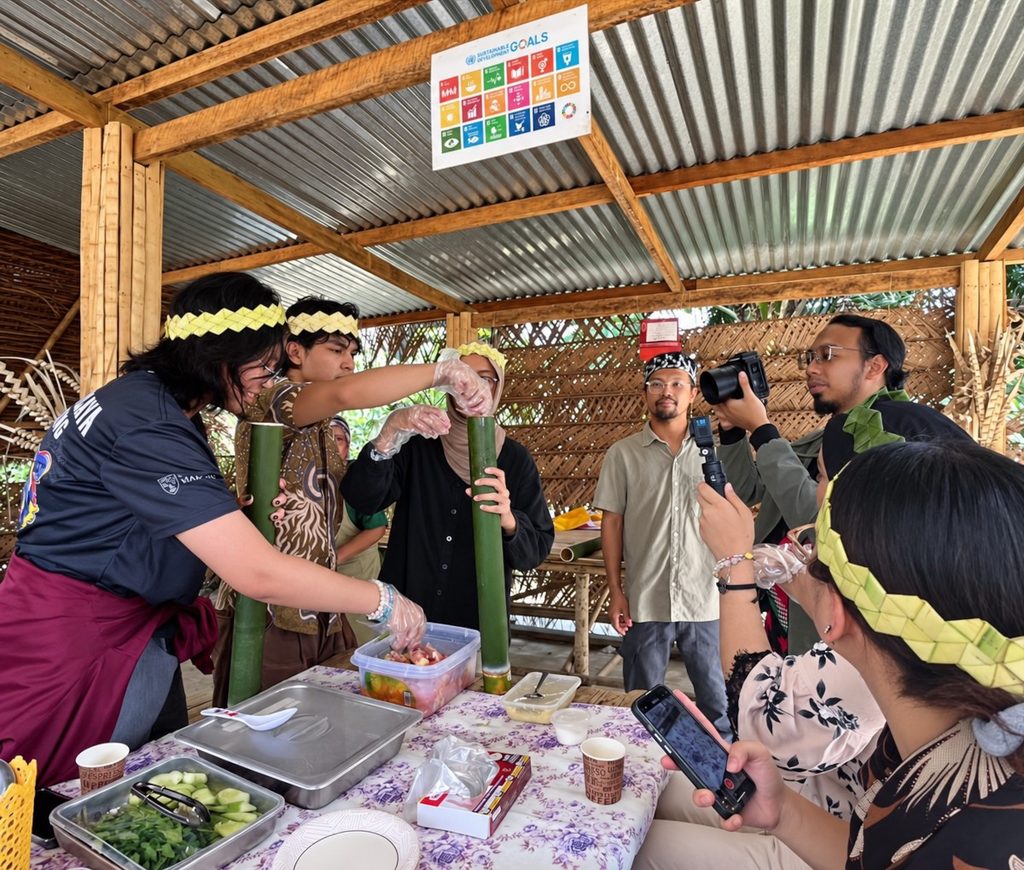
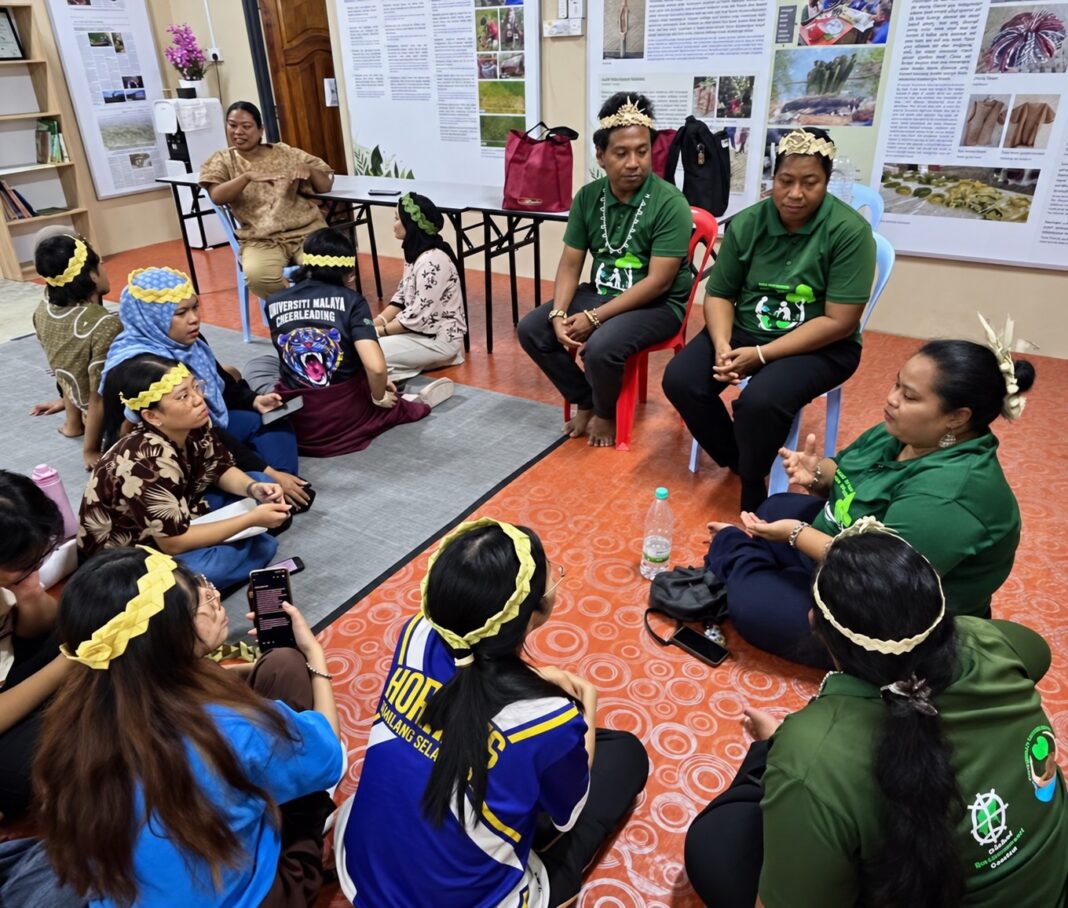
Preparations for the July trial had begun in December, when groups of first-year Sociolinguistics students researched and developed the game’s initial content. They consulted journal articles, books and social media posts shared by community members. However, the students found the available sources limited and some information difficult to verify. A visit to TCIC offered an opportunity to address these gaps by learning directly from community members, clarifying uncertainties and checking that the game’s content accurately reflected Orang Asli Temuan culture.
During their first visit to TCIC in December, the university students, accompanied by their lecturers, took part in cultural activities organised by community members. Students were able to witness traditional dances firsthand and experience the preparation of traditional food themselves, allowing them to gain a deeper understanding of the Orang Asli culture. The site tour also gave students insight into daily life in the Orang Asli community, helping them develop the VR scenes and storyboards with industry partner. A highlight of the visit was a focus group discussion, during which students asked questions about the proposed content and sought community members’ views. These conversations clarified uncertainties from their independent research and helped shape the structure and content of the VR game.
The second visit to TCIC built on this preparation, giving Orang Asli youth the opportunity to try the VR game. As the equipment was set up, the children appeared curious and eager to begin. A pre-trial survey found that they felt nervous yet excited. Most were experiencing VR for the first time, while some were keen to try it again. While waiting for their turn, participants joined colouring and small-group activities facilitated by university students. The hall filled with excitement as the activities got under way. The Orang Asli children also watched a digital story produced by an earlier cohort of university students and based on the Orang Asli folktale Kelayek Den. They were eager to answer questions in the quiz that followed. Their enthusiastic participation suggested that familiar cultural content could provide an engaging context for English practice.
The project highlights the value of adapting educational technology to community needs. It draws on design thinking, an approach that begins with people’s needs and refines ideas through testing and feedback. Consultations with community members helped shape the cultural content, while the trial gave children an opportunity to share their responses to the learning activities. The partnership between the university, industry and the community also offered undergraduates opportunities to develop empathy through listening and dialogue. Facilitating the activities allowed them to practise communication and teamwork while adapting to participants’ needs. Such experiences can deepen their sense of social responsibility and help them put academic learning into practice.
As Children’s Day approaches, let children’s voices be heard and respected, and create opportunities for people from different communities, backgrounds and age groups to share their knowledge and expertise and learn meaningfully together, both within and beyond the classroom.
The author is a Senior Lecturer at the Department of English Language, Faculty of Languages and Linguistics, Universiti Malaya, and can be reached at chewshinyi@um.edu.my